Chicken Chanko Nabe at Home for Four
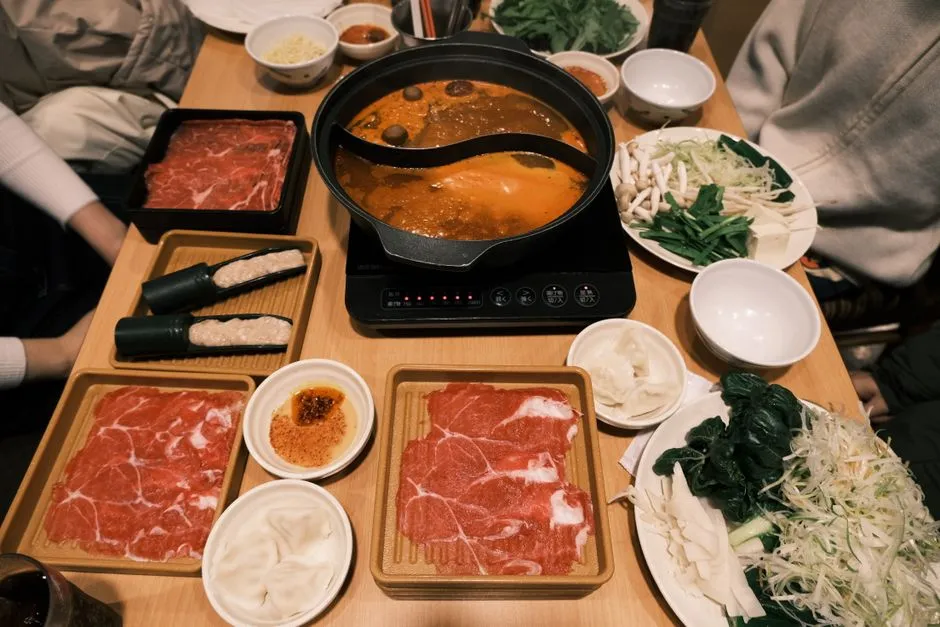
One measured home adaptation for four
This chicken chanko-style nabe combines boneless chicken thigh, napa cabbage, daikon, carrot, shiitake, tofu, and scallions in a soy-ginger chicken broth. It serves four as a main dish with rice. It is an independent home recipe, not an official sumo-stable formula.
The pot begins with 6 cups (1.44 liters) of stock and needs a 5- to 6-quart (4.7- to 5.7-liter) vessel. Smaller cookware invites overflow; use two pots rather than asking cabbage to understand optimism.
Find the broader language and tradition notes in chanko context.
Ingredients
For the broth:
- 6 cups (1.44 liters) unsalted chicken stock
- 1/4 cup (60 ml) soy sauce
- 2 tablespoons (30 ml) mirin
- 1 tablespoon (15 g) finely grated fresh ginger
For the pot:
- 8 ounces (225 g) daikon, peeled and sliced into 1/4-inch (6 mm) half-moons
- 5 ounces (140 g) carrot, sliced 1/4 inch (6 mm) thick
- 1 pound (450 g) boneless skinless chicken thighs, cut into 1-inch (2.5 cm) pieces
- 6 ounces (170 g) fresh shiitake mushrooms, stems removed and caps halved
- 8 ounces (225 g) firm tofu, drained and cut into 1-inch (2.5 cm) cubes
- 12 ounces (340 g) napa cabbage, white stems and leafy sections separated, both cut into 2-inch (5 cm) pieces
- 4 scallions, cut into 2-inch (5 cm) lengths
Serve with cooked Japanese short-grain rice if desired. Check all labels: soy sauce often contains wheat, stock can contain multiple allergens, tofu and soy sauce contain soy, and mirin contains alcohol. Use suitable verified alternatives for diners' needs rather than assuming simmering removes all alcohol.
Prepare separate work areas
Wash and cut the vegetables and tofu before opening the chicken. Keep ready-to-eat ingredients on clean plates. Use a separate board, knife, and plate for raw poultry, or wash and sanitize equipment correctly before it touches anything else. Do not rinse raw chicken; splashing can spread contamination.
Place a clean food thermometer beside the stove. Confirm that its probe can measure small chicken pieces according to the manufacturer's instructions.
Season and start the roots
In the pot, combine the chicken stock, soy sauce, mirin, and ginger. Bring to a boil over medium-high heat, then reduce to a steady simmer.
Add the daikon and carrot. Cover partially and simmer for 8 minutes. The pieces will not be fully tender yet; this head start keeps them from crunching long after the cabbage has surrendered.
Add chicken without crowding
Using clean tongs, lower the chicken pieces into the simmering broth one at a time so they do not clump. Discard the raw-chicken plate or move it directly to washing. Return the broth to a simmer and cook for 5 minutes, stirring gently once to separate pieces.
Do not taste with a utensil that touched raw chicken. Keep the liquid simmering rather than boiling so hard that pieces break and broth leaps toward the burner.
Finish with vegetables and tofu
Add the shiitake, tofu, and white napa stems. Simmer for 5 minutes. Add the leafy napa sections and scallions, then simmer for another 3 to 5 minutes.
The pot is ready when daikon and carrot are tender, cabbage stems are cooked but not disintegrating, and every checked chicken piece reaches at least 165°F (73.9°C) at its thickest center. USDA's current safe-temperature chart gives that poultry minimum. Follow stricter local or individual requirements when they apply.
If any piece is below the endpoint, continue simmering and recheck with a clean probe. Color is not a reliable safety test.
Taste only after the chicken is safe
Once the endpoint is confirmed, taste the broth with a clean spoon. Add soy sauce 1 teaspoon at a time only if needed; stock and soy brands differ in salt. If it is too concentrated, add hot water 1/4 cup (60 ml) at a time and return the pot to a simmer.
Carry the hot vessel only if its manufacturer permits table service and the route and surface are safe. Otherwise ladle portions in the kitchen. Warn diners that broth, tofu, and pot stay very hot.
Store leftovers promptly
Transfer leftovers to shallow containers and refrigerate within two hours, or one hour when the surrounding temperature is above 90°F (32°C). Use refrigerated leftovers within three to four days under current USDA guidance and reheat them to 165°F (73.9°C). Follow stricter local advice where applicable.
Do not keep communal broth if its time, temperature, or utensil history is uncertain. The explainer on what chanko nabe means discusses the optional final rice or noodle course; home hot pot keeps that choice inside safe service timing.